
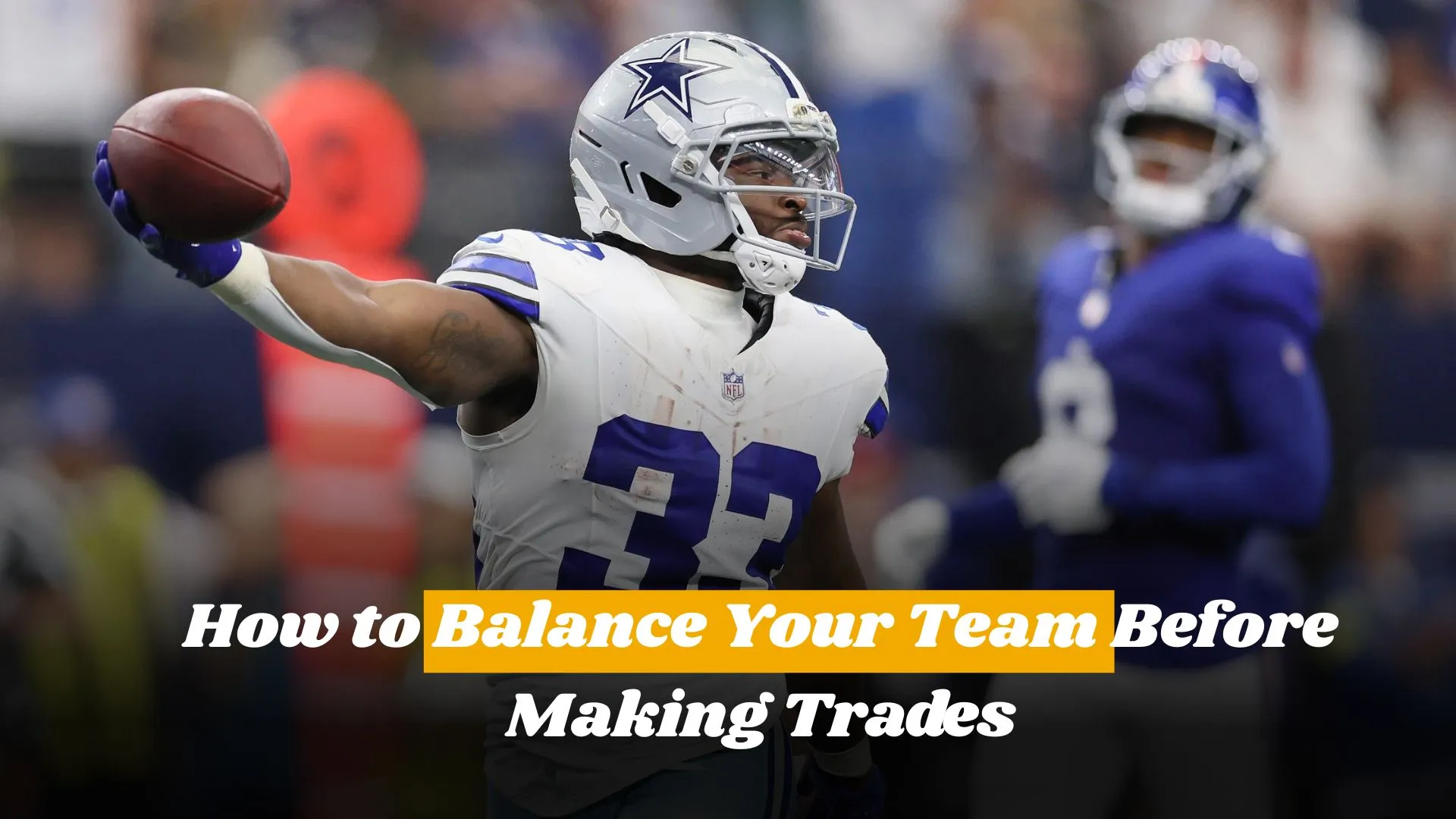
Balancing your team before making any trade is one of the most important steps in building a strong and competitive team. Many team owners think that trading is only about getting a strong player, but that is not true. A good trade is not just about a strong player; it is about improving the balance of your whole team. When your team is balanced, every position works well, and your team stays consistent for the entire season.
Before making any trade, you must understand what your team really needs. Many people make the mistake of trading just because they like a player or want a big name. But a big name does not always improve your team. What matters is balance. A team with balance wins more games, stays consistent, and has fewer weak spots. This is why checking balance is the first step before thinking about any trade.
Check Player Positions and Roles
Balancing your team starts by looking at each position. You must check if any position is too weak or too strong. For example, if you have too many players in one role but very few in another, your team becomes unbalanced. This can cause problems because you may lose games simply due to a weak position. A good team always has enough strength in all positions.
Understanding player roles is equally important. Every player has a role—some score, some defend, and some assist. If your team has only scorers but no defenders or support players, it will be unbalanced. A good team needs a mix of roles. A team with scoring players, reliable defenders, and consistent support players is more stable and competitive.
Check Player Stats and Form
Before making trades, always check player stats. Stats show points, goals, assists, minutes played, and overall performance. A consistent player is always more useful than a player who performs well only occasionally. Consistency helps your team remain strong throughout the season.
Player form is also important. Some players start the season strong but may drop later, while others start slow and improve steadily. Balancing your team means keeping a mix of stable players and high-potential players. This ensures your team stays competitive over many weeks.
Consider Injuries and Fitness
Injuries can greatly affect your team balance. A player who frequently gets injured is a risk, even if he is very strong on paper. It is better to trade for a player who is healthy and reliable. Fitness is equally important. Players with good fitness are more likely to be available when needed, while players with constant injuries or low fitness reduce team stability.
Avoid Overreliance on One Player
Many team owners make the mistake of depending too much on one star player. If that player gets injured or underperforms, your team may struggle. Balanced teams spread responsibility across several players. This ensures that your team remains strong even if one player is unavailable. When making trades, always think about how each new player will affect the overall team balance, not just one position or star.
Plan for Short Term and Long Term
It is important to consider both short-term and long-term performance when trading players. Some players may perform well for a few matches but may not be reliable over the entire season. Others may start slow but provide strong results in the long term. A well-balanced team maintains a mix of players for immediate impact and long-term consistency. Trades should be made with both aspects in mind.
Use a Trade Calculator to Confirm Balance
After checking positions, roles, stats, form, injuries, and future performance, you should always use a trade calculator to confirm your decisions. A trade calculator helps you compare two players quickly and shows which trade is fair and balanced. This ensures that your team improves in strength without unintentionally creating weak spots. The calculator is especially useful for beginner team owners but also helps experts verify their trades.
Avoid Emotional Trades
Emotional trading can destroy team balance. Many team owners keep players they like, even if they do not help the team. This reduces team performance. Smart team owners make trades based on data, not emotions. If a player does not fit the team needs, it is better to trade him for someone who improves balance, even if that player is less popular.
Consider Team Fit and Strategy
A player may be strong individually, but if he does not fit your team strategy, he may not help you win. Always trade for players who fit your tactics, complement other players, and improve team balance. This ensures that the trade strengthens your team as a whole rather than just adding one star player without purpose.
Plan for the Whole Season
Balancing your team is not only about the next game but about the entire season. Short-term thinking may lead to unbalanced teams later. Consider upcoming matches, player schedules, and overall performance trends. Balanced teams plan ahead. They include players who give consistent results over weeks and avoid taking risks with unpredictable performers.
Tips for Making Smart Trades
Always check player stats and form.
Always check injuries and fitness.
Consider team balance and roles.
Avoid relying on just one player.
Plan for short-term and long-term performance.
Use a trade calculator to verify the value and fairness of trades.
Avoid emotional decisions and focus on team needs.
Following these tips ensures that your team stays strong, competitive, and balanced.
Why Balanced Teams Win
Balanced teams win more games because they are consistent. They have fewer weak spots and are prepared for unexpected situations like injuries or poor performance. A balanced team also reduces stress for team owners because every position contributes effectively. By comparing players carefully, planning trades wisely, and using a trade calculator, you can create a team that performs well throughout the season.
Final Thoughts
Balancing your team before making trades is simple but powerful. It protects your team from mistakes, improves overall strength, and ensures stability for the entire season. A trade calculator can help you confirm decisions and make fair trades. Smart team owners check positions, roles, stats, injuries, form, and overall fit before trading. By following these steps, your team becomes stronger, smarter, and ready to win.